Courses After 10th (2026): Diploma, Stream & High-Salary Career Options
One of the most important decisions of one’s life is to choose the right career path from different courses after 10th. After completing your 10th


In the present era, the demand for professionals in legal compliance, corporate governance and regulatory requirements is growing. With the rising demand for qualifications, such as Company Secretary (CS), it has become a sought-after career amongst students. Students often search, “how to become a company secretary in India?”
Well, before you start your journey to becoming a Company Secretary (CS), it is best to learn about the eligibility requirements, the registration process, the course structure, as well as the training requirements.
If you are curious, then here is a guide offering you insights on how to pursue the CS course, career opportunities, fees, structure, examination, and other important factors:
H2: Company Secretary at a Glance (summary table)
Before we learn how to become a company secretary in India, let’s take a glance at the Company Secretary here:
Particular | Details |
Role | Company Secretary (CS), key managerial personnel where applicable |
Regulatory body | Institute of Company Secretaries of India (ICSI) |
Entry eligibility | Class 12 pass or appearing |
Course levels | Foundation, Executive and Professional |
Practical training | As prescribed by ICSI |
Final designation | Associate Member (ACS) |
Exam frequency | As per the examination schedule |
Average duration | Appro. 3–4 years |
Career roles | Compliance officer, legal advisor, governance professional, practising CS, etc., |
Key skills | Corporate law, drafting, communication and ethics |
A student can pursue the CS course after 12th. A Company Secretary refers to a professional who manages a company’s compliance with corporate laws, follows appropriate governance practices and also maintains statutory records.
Under Section 203 of the Companies Act, 2013, a Company Secretary is a professional who is recognised as key managerial personnel (KMP) in a company. The membership and course of CS in India is regulated by a professional body known as the Institute of Company Secretaries of India (ICSI).
Wondering why to choose a CS course after 12th? Well, here are some opportunities you need to know about:
High Demand: CS professionals can work with high-paying start-ups, MNCs, listed companies, and firms in leadership roles.
Career Growth: Professionals work in senior positions in the governance and compliance department.
Field Knowledge: The course helps in developing expertise in regulatory matters and corporate law.
Flexible Career Options: Professionals can select a path by securing corporate employment or practicing independently.
You can Read Also:15 Best Courses After B.Com
So, how to become a company secretary in India? The first thing to focus on is to gain legal knowledge as well as professional skills. Some of the skills required include:
So, what are the company secretary eligibility criteria? In order to become a CS, a candidate needs to meet all the educational requirements as per the Institute of Company Secretaries of India (ICSI). The criteria depend upon the program and entry route:
Entry Route | Eligibility |
Foundation | Class 12 pass or appearing candidates, subject to applicable rules |
Executive | Foundation pass candidates or eligible graduates under direct-entry rules |
Professional | Candidates who have cleared the Executive Programme |
Not sure how to become a company secretary in India? If you are confused, then here is a step-by-step guide, helping you understand everything in detail:
If you have just completed your 12th, then you can take the entrance route. Those who have cleared graduation or the Foundation level can get direct entry to the Executive programme.
Go through the ICSI website and select your entry route, fill in the registration form and upload the required documents as well as the fee.
Candidates to apply for the Foundation route. Graduates can skip this stage and apply for the direct entry route.
Prepare for the examination and cover subjects such as business laws, company law, taxation, accounting, and prescribed papers as per ICSI.
Clear the advanced professional examination that covers specialised subjects, finance, corporate governance, compliance, and other subjects.
Complete practical training as well as development programmes. As per ICSI, a candidate needs to complete 21 months of long-term practical training.
After completing the exam, training and other formalities, the candidate can apply for ICSI membership. Any eligible member can use the ACS designation.
What’s the CS syllabus and exam pattern? Let’s understand it with the help of a table:
Level | Main Subjects | Exam Pattern |
Foundation (legacy) | Business Environment, Economics, Accounting and Business Laws | 4 papers |
Executive | Company Law, Tax Laws, Accounting and Securities Laws | 7 papers in two groups |
Professional | ESG, Compliance, Corporate Restructuring, Valuation and Electives | 7 papers |
For Foundation level, the criteria for passing require the Candidate to at least score 40% in each paper with an aggregate of 50% in one sitting.
The Executive and Professional Programmes require the candidate to score at least 40% in each paper with an aggregate of 50% in the relevant group or subject. Exemption may be applicable to eligible candidates as per the ICSI rules.
You can Read Also: CMA Exemption Rules
| Programme | Approx. Fees |
| Foundation registration and exam | INR 35,000 (with exam fee) |
| Executive Programme, including both group exam fees | INR 45,000 |
| Professional Programme, including both group exam fees | INR 60,000 |
| Total estimated ICSI fees | INR 1,00,000- 1,20,000 |
Expense | Self-Study | Coaching |
Registration | Applicable | Applicable |
Study materials | Selected resources | May be included |
Coaching fees | Not required | Varies as per coaching |
Mock tests | Free or paid | May be included |
Revision material | Self-prepared or purchased | May be provided |
What is the overall scope and company secretary salary? Let’s learn about it with the help of the table below:
Experience Level | Indicative Annual Salary |
Newly qualified CS | INR 3–7 lakh |
3–5 years of experience | INR 5–12 lakh |
Senior professionals | INR 10–20 lakh or more |
Kindly note that the figures mentioned here are indicative.
You can Read Also: Highest Paying Jobs in India 2026
A Company Secretary have plenty of career opportunities and can work as a:
Industries that hire CS professionals include manufacturing, IT, healthcare, financial services, banking, and MNCs. Eligible members can also practice independently after completing the certificate of practice.
Just completed the company secretary registration process and wondering how to prepare for the examination? Well, here are a few tips to follow:
Plan your studies by dividing the syllabus into weekly or monthly targets. Make sure to use ICSI materials only for the examination.
Regular revision is quite important, so practice past papers that will help you understand the exam pattern and expected answers. Mock tests are also important for regular practice.
Make sure to allocate specific time or duration for a particular paper or subject. It helps improve time management while giving you enough time for revision.
Planning should not be limited to the ICSI exam. Make sure to plan for the exam, registration, coaching and study material-related expenses.
You can also go for the self-study option to manage costs significantly. However, coaching guidance can help you achieve your target faster.
Individuals who are employed can also explore employer-sponsored education support to minimise financial burden.
Yes, a candidate can apply for the CS course after 12th. Graduates and postgraduates can also take the direct entry route for the Executive programme.
CS syllabus usually requires 3 to 4 years to complete, depending on the entry route, attempts at the examination, and the training completion.
The qualification requires candidates to have daily practise and preparation. CS is focused on corporate law, compliance and governance. CA is focused on auditing, taxation, and accounting.
Yes, you can start the process for company secretary registration even while doing a job or continuing a degree. However, make sure to manage your time, clear exams, and meet training requirements.
ACS is known as the Associate Company Secretary when a candidate becomes a member after completing the ICSI course. FCS is a term for Fellow Company Secretary. It is the fellowship granted by ICSI for eligible candidates.
The company secretary eligibility differs as per the programme. It is best to check the relevant information on the website before appearing for the exam.
Now that you know how to become a company secretary in India, you can register for the program and start preparation for the exam. With the right dedication and preparation, you can achieve your goal of becoming a CS.
However, having the right guidance is definitely a game changer for anyone planning to pursue a CS career path. Gyan Sagar Classes is here to provide you with dedicated mentorship with the help of experts in the industry.
So, what are you waiting for? Check your eligibility for ICSI now and take your first step towards a CS career path!
Get Admission Now
One of the most important decisions of one’s life is to choose the right career path from different courses after 10th. After completing your 10th

Updating your resume and wondering, “I cleared CMA, now what?” Finding the next step after completing CMA is quite crucial for your career. Some candidates
The CMA full form is Cost and Management Accountant in India while in the US, it stands for Certified Management Accountant. Both use the abbreviation
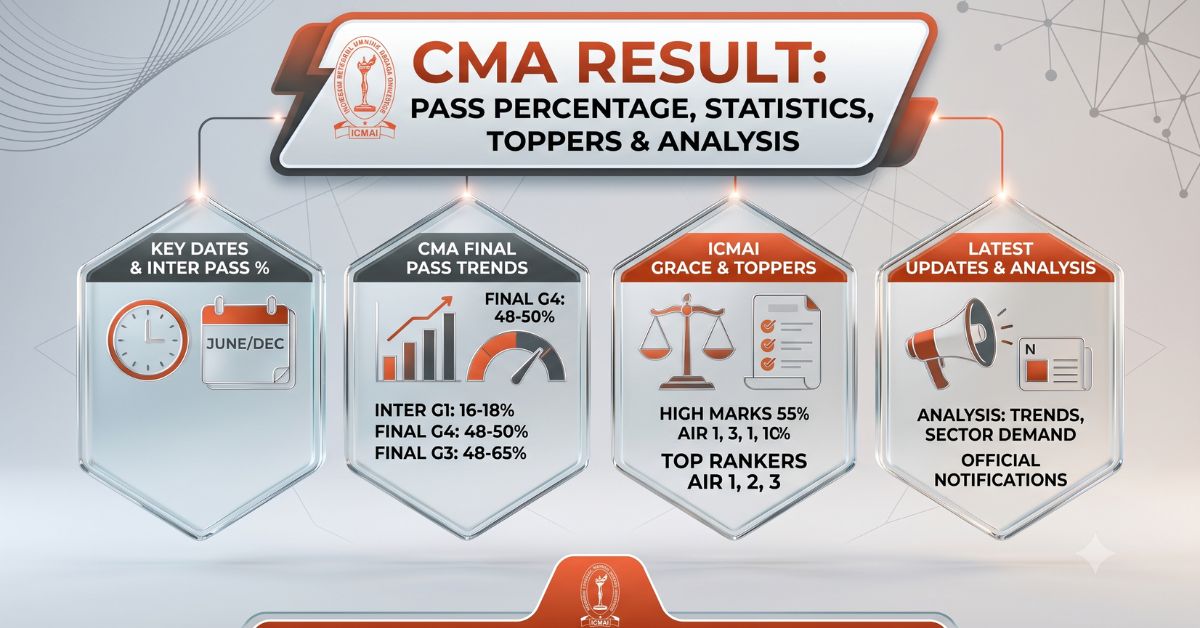
CMA Result 2026 Official Date The CMA Result 2026 for the June examination has been declared by the Institute of Cost Accountants of India (ICMAI).
Get Admission Now